
Crispin Brooks Turns Music Into Cinema With “Run Away”
Crispin Brooks thinks in scenes before verses. Raised by parents who were, among other things, writers and teachers, he
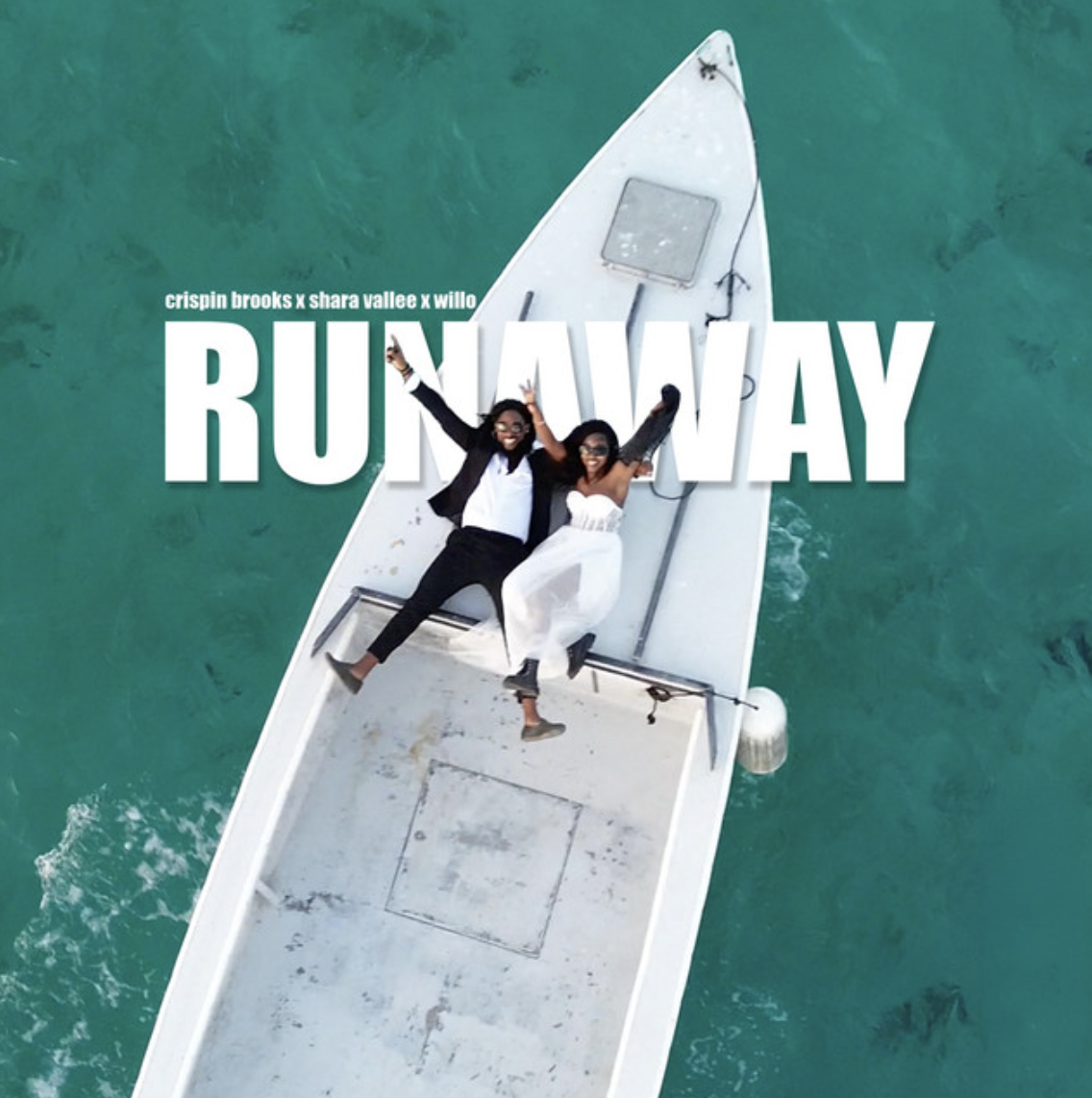
Crispin Brooks thinks in scenes before verses. Raised by parents who were, among other things, writers and teachers, he studied classical piano by age 7, took formal art classes by 11, and read widely before his work moved through journalism, graphic design, and film. His pull toward music began just as visually: early MTV videos in the mid-’80s, along with the melodies and jingles of Nickelodeon and Sesame Street, gave him an early fascination with short-form storytelling set to music. “At my core, I’m a storyteller,” he says, and that has stayed true whether he is writing songs, directing videos, developing artists or building through music publishing.
After returning to the Caribbean in the late 2000s, Brooks began shooting music videos, then writing for soca bands and solo artists. In the smaller islands of the Northeastern Caribbean, he became known for helping artists shape the full presentation around their music. As a label owner and artist manager, he also guided Nyne and Shara Vallee to several local and regional hits, with Nyne helping bring island pop further into view in Anguilla and St. Maarten/St. Martin. “Run Away,” the new release from Crispin Brooks x Shara Vallee x Willo, carries that history into a project rooted in Anguilla, Caribbean rhythm, and the kind of music-video ambition Brooks grew up admiring.
“Run Away” opens a new chapter for Brooks through The Dream Jungle/The Dream Jungle Publishing, his new media entity. Willo, also known as Jemal Willock, supplied the beat that sparked the chorus, while Shara Vallee brings the vocal performance at the center of the record. Both connections go back years: Brooks has worked with Willo across several releases, and Vallee, his cousin, has collaborated with him across genres.
The track reflects Brooks’ Caribbean ear and pop instincts. Raised around reggae, dancehall, soca, calypso, zouk, bouyon, and kompas, while also absorbing hip-hop, ’90s pop, R&B, dance, house and rock, he writes in a lane where island cadence meets clean pop structure. “Run Away” comes through as an uplifting, bouncy dance-pop record with a four-on-the-floor drive and an island-pop lift. It moves fast, but the hook does more than push the record forward. It opens the door to a story. That story began as a visual. Once the chorus stuck, Brooks kept seeing a wedding scene, then looked for a way to turn the setup on its side. The approach comes from his love of the classic ’80s and ’90s music-video era, when pop visuals often came with characters, styling, lighting, choreography, and real narrative shape.
The “Run Away” video flips the expected wedding-crasher plot. Instead of a man rushing in to reclaim the bride, the groom is still drawn to an ex, and the interruption turns him into the runaway. Shot in Anguilla, including Green Space park, the video uses open-air settings and wide drone views over the water to underline escape, freedom, and the pull of love, while still leaving room for the quirky, comedic moments Brooks wanted in the story.
The video also gives Vallee space to step outside her comfort zone as an artist and play a character, adding another layer to a release built around performance, narrative and movement. With recording engineer Sheraul “Shay” Hughes, editor Ralston Smith, producer Lauraine Gumbs and the full cast and crew helping bring the wedding scene to life, “Run Away” points toward the projects Brooks is already building next. He has several more singles outlined from concept to treatment, with music made for dance floors, screens and the stories still ahead.
1. How did “Run Away” come together?
Willo and I have been working for quite some time. I’ve actually known him since he was a teenager, and he was the maestro in a local Soca band in Anguilla. I said to him, “I want to work on a series of songs. It may be singles, or I may do an EP- who knows?” He sent me a package of beats. One of those beats was the beat for “Runaway.” I don’t write like a typical songwriter. Because I am a filmmaker, I listen to a beat, and I sort of conjure up images. The question I always ask myself is, “What would this video be about, or what scene in a movie would it fit into?” That always leads me, interestingly enough, to the hook or the chorus. Once that’s done, I can get into the verses. So, with this beat I somehow saw and felt a sense of urgency for the character in the video. The words “run run away” came to me almost immediately and that’s all I had for months. I was just humming the chorus over and over and I said to Shara “I don’t think we need much more than this. This could be the chorus. She agreed that it was catchy, and I went from there into writing the verses in the studio and came up with this song.
2. What story did you want to tell with the song?
Once I got the visuals and the chorus, I decided that I would write the verses reflecting an obsessed character. I wasn’t sure who that character would be, or even if Shara would portray said character. I decided upon an obsessed bride. We’re so used to seeing the guy approaching the wedding of his ex-lover at the altar and demanding that she elope with him. We usually don’t see the former girlfriend approaching the wedding and escaping with the groom. I figured that it would be an interesting plot twist to have Shara be that bride who captures her man.
3. How did Willo’s beat help shape the track?
At this point in our musical relationship, Willo knows exactly what I love. The compositions and beats that we discuss are usually very melodic. He gives me room to add the harmonies to really write so that the lyrics are concise, clear, sometimes poetic and understood by the audience. He has a knack for creating cinematic-sounding beats. His tones are pleasant to the ear, and he knows how to combine instruments well. I know that’s a very simple way of putting it, however, he is a mastermind when it comes to that and I really enjoy working with him as a songwriter. He’s quite open to my ideas in terms of beats and general instrumentation. We go back and forth and give suggestions here and there. I think we should use timpani here, change the key there. That sort of thing. We have a wonderful relationship. The beat for Runaway was no different. We edited the first version of the beat over and over until we were both satisfied. One important note is that Willo is also an incredible sound engineer, so he knows how to treat vocals so that we get exactly what we want. His beat definitely plays a major part in this song.
4. What was it like working with Shara Vallee?
Shara and I have been working on music together for the past 15 years. Those that have been following either of us for a while may already know that we are cousins. We started with zouk and soca and other Caribbean genres. Around seven years ago, we started experimenting a little bit with dance music and island pop and now we actually do both. She is now re-entering soca in a big way; however, I stole her away just for this project to do a few dance pop records with me. Just one more time (LOL). I’m sure we’ll do more in the future; however, I know she loves soca and Caribbean music so I would never want to tear her away from that. Our chemistry with recording this record did not skip a beat. Although I wrote the song, I also assisted heavily with the vocal production. We trust each other tremendously and lean on one another for ideas and suggestions. “Runaway” is another result of our trust and relationship.
5. How have hip-hop and Caribbean music influenced you?
I think it goes without saying that Caribbean music has influenced me. I grew up on three different islands, so I was steeped in a mix of potent and incredible music. The influences from Europe, the Caribbean and the United States lent to this potpourri of sounds in my head. Growing up in the Caribbean, radio stations weren’t separated by genre. You would hear reggae, followed by hip-hop, followed by pop, followed by country. So, I definitely had a broad range of influences. I must note though, that I was and I am still influenced by older calypso songs and dancehall in particular. The cadence, word play and attitude in delivery intrigue me. I try to incorporate many of those elements when I write. But Caribbean music has influenced me melodically and in terms of how I structure my harmonies. I actually learned harmonic structure from church ever since I was a child. Listening to choirs sing different parts to a hymn or song allowed me to figure out how to layer harmonies and arrangements in the studio. Coming up in an environment where you could access music for free was priceless. Hearing live bands at carnival, festivals etc. definitely shaped my approach as a creator.
I can’t understate how important hip-hop has been. BET made its entrance into Caribbean households in the late 1980’s and offered a window into the US music scene like never before. The music videos and sounds drew all of us in. Even today, the structure, wordplay, and approach to some of the songs I write are definitely guided by my learned hip hop and R&B sensibilities.
6. How have music, film, and artist development shaped your work?
Music, in general, informs my work. I take inspiration from so many different genres and different periods of my life. It goes as far back as ’80s pop music, to hearing my aunt listening to Motown while she cooked, to my first real exposure to rock through Nirvana and Guns N’ Roses in the early ’90s. Then there was my dad’s classical music collection, which introduced me to composers like Vivaldi and Mozart.
My head is basically a library of sounds, tones, and beats. Music is everything. It really does set the soundtrack and the rhythm of your life, whether you realize it or not. I see myself almost as a conduit for all of those influences; processing those sounds and experiences and hopefully creating something different that a new audience can enjoy.
Like music, visuals mean the world to me. I’m not going to call myself a music video connoisseur, but I absolutely love and adore music videos from all genres. I love the art of storytelling, and I think short-form music videos have always been one of the best mediums for telling stories.
At the same time, there are masterful films that have stayed with me over the years, and I definitely draw inspiration from them, in terms of cinematography, story, texture, and atmosphere. Even when I’m thinking about a music video, those cinematic influences come into play. And sometimes a storyline or something I’ve seen in a film will inspire my writing as a songwriter. So, for me, it’s all-encompassing. It’s this entire hodgepodge of influences that somehow comes out as art from Crispin Brooks.
Artist development has shaped me tremendously as well, including my own development as an artist and creative. I’ve learned from artists I’ve had conversations with, artists I’ve managed, journalists I’ve spoken to, and people I’ve worked alongside. Coming to this point as a writer and co-producer has really been the total of everything I’ve learned along the way.
Managing artists taught me a lot. You see their frustrations and sometimes their flaws, but you also get to celebrate their victories with them. And, of course, I’ve been criticized as a manager for certain things as well. You learn as you go.
Actually, I’m glad you asked this question, because I think one of the most important elements of this business is learning how to take criticism, and also learning how to criticize yourself. You have to be able to step outside of yourself, look at the work, and understand the relationship between your art and the business of your art. I think everything I’ve experienced on both sides of that equation has ultimately shaped the creative I am today.
7. Why did you change the usual wedding story for the video?
I like this question. I decided to shift the narrative because I think as I mentioned earlier, we’re so used to seeing the man running to the altar and grabbing his bride and running away with her into the sunset. I thought it would be interesting to put Shara in that position of power and to see her run away with the groom and have his character in a vulnerable position admitting, “I love this woman and I am going to run away with her.” So, he becomes the “RUNAWAY” … The runaway groom. Hence the name.
8. What was it like filming in Anguilla?
Filming in Anguilla is always fun. Shara and I both love the atmosphere there. Obviously, we spent a lot of time in Anguilla as children and now as adults, so there’s a familiarity and a connection to the island that makes the experience special.
The community has also become accustomed to us experimenting with videos and different creative projects, so we receive a tremendous amount of support. Whether it is businesses, restaurants, or villas, the response is usually, “Oh, you guys want to do a video? Okay, no problem. I can’t wait to see it.” There’s a lot of love and encouragement from the community, which I really appreciate.
And honestly, it’s just a lot of fun, especially when it comes to the visuals. When you’re working with Anguilla’s natural environment and its beaches, it’s pretty hard to mess those shots up because the island is simply that beautiful. It’s a gorgeous, gorgeous place, and visually it gives you so much to work with.
9. What can fans expect from your upcoming projects?
Fans can expect a lot more experimentation. I’ve always loved pop, dance-pop, house music, EDM… Call it what you may. But I’m also from the Caribbean, so I’m going to continue experimenting with fusing soca, dancehall, zouk and, of course, hip-hop into what we traditionally think of as dance music or dance-pop.
Because of that, some of the cadence, the tones, the storylines and even the subject matter may feel distinctly Caribbean or at least have a touch of the Caribbean woven into them. I think that’s part of what makes my work unique.
To my knowledge, there aren’t many songwriters or producers from the Caribbean writing and producing extensively in this particular space, especially EDM. So, I think I bring a slightly different perspective to it. I’m taking all of these influences that are naturally a part of who I am and figuring out how they can live within dance music.
That experimentation is something I’m really excited about, and I can’t wait to share more of it with the world.
10. Anything else you’d like to share with the hip-hop and Caribbean music communities?
Great music can be found in places you may least expect. Sometimes I’ll let my playlist play all the way till the end just to see what it recommends for me based on what I’ve been listening to. I do the same thing on YouTube. Sometimes I just let the algorithm go crazy and send me music and videos from all over the world.
I’ve discovered tons of songs that way that I genuinely love. I actually have a playlist called “Absolute Favorites,” and some of those random discoveries have ended up becoming some of my absolute favorite songs.
So I would say to the hip-hop and Caribbean music communities: just continue to support good music and give artists a chance. Give new and emerging artists a chance, but also don’t forget about artists who may have been around for a while and simply aren’t trending right now. Some of those artists are still making incredible music, and some of their new records are excellent.
There is so much great music out there beyond what we’re immediately presented with. Explore a little. Be open to discovering something unexpected, and allow your soul to be touched by new music.
Follow Crispin Brooks


