From the Blog Era to Cinematic Storytelling, the New York Artist Reflects on His Journey and What’s Next
Born and raised between the South Bronx and Brooklyn, City Haze has spent years building a career rooted in
Born and raised between the South Bronx and Brooklyn, City Haze has spent years building a career rooted in East Coast hip-hop, melodic storytelling, and independent artistry. During the blog era, he earned recognition from some of hip-hop’s most influential publications, stood alongside major names in the Online Hip-Hop Awards, and later won the Underground Music Awards’ #1 Contender Award.
Now, more than 15 years into his journey, City Haze is entering a new creative chapter with his upcoming single “Like We Are,” featuring Kyle Owens, and an ambitious quadruple music video rollout featuring “Supafly,” “Cheese Mac,” “Ric Flair,” and “The Message.”
In this conversation with Tha Culture Report, City Haze reflects on growing up between two legendary New York boroughs, navigating the independent music industry, and building a career on his own terms. He also discusses his creative process, his approach to AI filmmaking, the stories behind his latest visuals, and why this next chapter represents a full-circle moment for an artist who never stopped believing in his vision.
1. You were born and raised between the South Bronx and Brooklyn, two boroughs with rich hip-hop histories. How did growing up between those neighborhoods shape your sound, your perspective, and the artist you eventually became?
Growing up between the South Bronx and Brooklyn gave me two different educations. The Bronx is where hip-hop was born — that’s the foundation, the drums, the cyphers, the pride. Brooklyn taught me how to survive and how to dream bigger than your block.
I wasn’t trying to be the hardest dude in the room. I grew up on old-school ’80s and ’90s R&B too, so melody was always in my house. That mix is why my sound is melodic but still East Coast. I can talk real life, but I want you to feel it, not just hear bars.
2. You first started gaining attention during the blog era, when platforms like XXLmag.com, HipHopDX, AllHipHop, and DJBooth were helping independent artists build audiences. What do you remember most about that period, and how did you navigate the industry as an independent artist?
The blog era was the last time it was really about the music first. If XXL, HipHopDX, AllHipHop, DJBooth, 2DopeBoyz, NahRight — if they posted you, people actually went and listened. No algorithm, no 15-second clip. You had to have a real record.
I remember just grinding emails, sending records, building relationships with editors. As an independent, I didn’t have a machine behind me, so I had to be my own label, manager, and promo. That taught me how to move — how to make one record stretch across 10 blogs, how to follow up, how to stay consistent. It was humbling, but it built me.
3. In 2008, you were the only unsigned artist nominated for the Online Hip-Hop Awards’ “King of the Net” category alongside major names like Soulja Boy, Lil Wayne, 50 Cent, Plies, and Diddy. What did that recognition mean to you at the time, and how did it influence your confidence and career direction?
That was surreal. I’m unsigned, no major budget, and my name is sitting next to Soulja Boy, Lil Wayne, 50 Cent, and Diddy. For “King of the Net” — that meant the internet chose me. The people chose me.
It confirmed I wasn’t crazy for doing it this way. It told me my sound could compete on that level without a deal. It gave me confidence to keep pushing as an independent and to trust that if the music is real, it’ll travel.
4. You went on to win the Underground Music Awards’ #1 Contender Award in 2010. Looking back at those early accomplishments, what do you feel was the biggest lesson you learned about building a career outside the traditional music industry system?
Winning #1 Contender at the Underground Music Awards in 2010 showed me that the underground is a real system. You don’t need permission from the industry to be validated.
The biggest lesson was ownership. If you build your own audience, your own relationships, your own catalog — nobody can take that from you. A label can shelf you. The streets, the blogs, the fans — if they rock with you, that stays. That’s why I’m still here today. I learned early to own my movement.
5. Your music blends melodic East Coast hip-hop with smooth production and clever lyricism. How would you describe your creative process when you’re trying to balance the lyrical substance of a record with its overall vibe and musical feel?
I start with the feeling first. If the beat doesn’t make me feel something, I can’t write to it. I need that smooth, soulful pocket — something you can ride to at night in the city.
Then I write honest. I’m not trying to overcomplicate it with punchlines just to show I can rap. I want clever, but I want it to land. If a line is too complex for the vibe, I’ll cut it. The vibe is the vehicle, the lyric is the message. When they balance, that’s when a record lives.
6. Hip-hop has evolved significantly since the blog era, especially with streaming, social media, and the way artists connect directly with fans. How have you adapted to the changing music landscape while staying true to your original artistic identity?
I adapted by learning the new game without changing who I am. Streaming and social media mean I can go direct to the fans now — I don’t need a blog to co-sign me, I can show you the visual, the story, the world myself.
But the core hasn’t changed. I still make melodic, soulful, East Coast music. I still write from real life. The tools changed — now I’m doing cinematic visuals, building whole worlds around a song — but the identity is the same kid from the Bronx and Brooklyn who loved R&B and hip-hop equally. I just have more control now.
7. Your new single “Like We Are,” featuring Kyle Owens, arrives November 20, 2026. What inspired the record, and how did Kyle Owens’ sung hook help bring the song’s concept and emotion to life?
“Like We Are” is about that real, present-tense late-night grind energy, that feeling when you’re riding, tunnel vision and everything else quiets down.
I produced it myself because I wanted that specific mood — smooth, cinematic, but still grounded.
Kyle Owens was perfect for it because his hook brings the soul. I can rap the reality, but when he sings that hook, it opens the record up emotionally. It makes you feel what I’m saying. That contrast — my verses and his voice — is what makes the concept hit. It’s not just a song, it’s a moment.
8. The official video for “Like We Are” is described as cinematic. What was the vision behind the visual, and how important is storytelling through music videos to the way you present your artistry today?
I created “Like We Are” late night pushing my imagination and AI filmmaking creative direction.
That’s really what it is. Late night, mind racing, me in my own world building something out of nothing. I wasn’t trying to make a regular performance video where I’m just rapping to the camera — I was pushing my imagination to see how far I could take it.
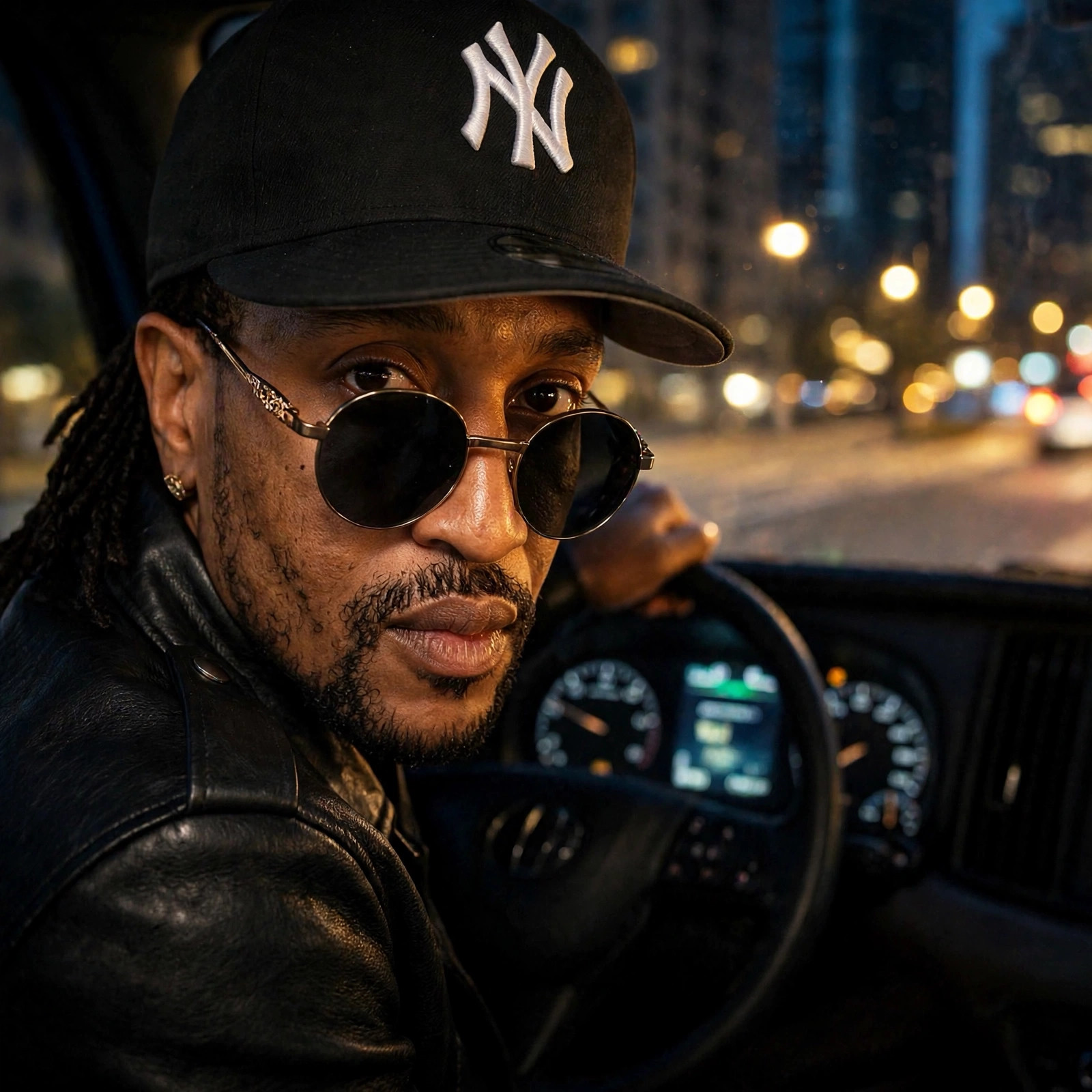
With AI filmmaking, I can direct the whole world myself. I can put myself in that car at night, with the city behind me, looking right at the camera — like that frame at 01:38 — and make it feel cinematic, like a movie, not just a music video. That’s a hustler’s story told in real time, tunnel vision, everything else quiet.
Storytelling is everything to me now. I’m not just dropping songs, I’m building worlds. If you can see the record, you’ll remember it longer. AI lets me be the writer, director, and star all at once, and show you exactly what I imagined late night when I made it. That’s how I present City Haze today — no limits on the vision.
9. You’ve also released a quadruple music video rollout featuring “Supafly,” “Ric Flair,” “Cheese Mac,” and “The Message.” What connects these records, and what can fans expect from the different sounds, themes, and visuals across the rollout?
What connects them is me — four different worlds, one vision. I wrote and directed all four.
Each one is a different side:
“Ric Flair” is luxury, confidence, penthouse energy. Neon, the coyote, that larger-than-life flex. It’s the champ talking.
“Cheese Mac” is Harlem noir — 1940s-50s, fedora, pinstripe, a night at the jazz club called The Cheese Mac. It’s smooth, it’s storytelling, it’s classic.
“The Message” is the heart. It’s a coming-of-age story — a young boy writing “CITY HAZE STAR DREAM” in his notebook, turning that dream into a galaxy, rooftop cipher, rain-slick bodega streets. That’s where I came from.
“Supafly” is sci-fi epic. Military plane skydive, ancient stone chambers, glowing green chip, holographic control room. That’s the future.
Four different sounds, four different visuals — but the same thread: a kid from New York who dreamed it and built it himself.
10. With titles like “Supafly,” “Cheese Mac,” and “Ric Flair,” alongside “The Message,” there’s room for different personalities and perspectives in this collection. How do you approach creating records that showcase different sides of City Haze while maintaining a consistent identity?
I don’t try to be one thing. I am a lot of things. I’m the businessman, I’m the romantic, I’m the kid from the Bronx and Brooklyn, I’m the dreamer. If I only showed one side, I’d be lying.
My approach is simple: the core stays the same — melodic, soulful, East Coast, honest — but I let the world change around it. “Ric Flair” can be flashy and “The Message” can be deep, because they’re both true. Consistency isn’t about sounding the same every time, it’s about being the same person every time. Fans know when it’s real.
11. You’ve experienced recognition from major hip-hop publications, award nominations, and underground music platforms throughout your career. What has that journey taught you about longevity, staying independent, and defining success on your own terms?
It taught me that longevity isn’t about being hot for a summer — it’s about surviving the seasons. I’ve seen blogs come and go, platforms rise and fall, artists get signed and shelved. I’m still here because I never gave my power away.
Staying independent means I get to define success. Success for me isn’t just a chart position — it’s owning my catalog, feeding my family through my own businesses, building Clover Hospitality Group + Clover Group Creatives, and still being able to drop music I believe in 15+ years later. That’s success. I didn’t quit when the blog era ended. I built. I pivoted to hospitality, built THE CHEF brand, built Clover Group, and then came back to music with my own resources. That’s longevity.
12. As you prepare to release “Like We Are” and introduce this new run of music videos, what chapter are you entering creatively? What do you want longtime supporters and new listeners to understand about City Haze and where you’re headed next?
This is the full-circle chapter. This is Star of the City meets everything I’ve learned since.
To the longtime supporters — thank you for staying down since the blog era, since “Lost In Tokyo,” since the Underground Music Awards. You watched me grow up. This run is for you.
To the new listeners — you’re not late. You’re right on time. I want you to understand that City Haze isn’t a gimmick, isn’t a moment. I’m a New York artist who built his own lane, his own company, his own cinematic universe.
Where I’m headed next is bigger visuals, more music, more stories — all on my own terms, through Clover Group Creatives. “Like We Are” is the door. The quadruple rollout is the house. Come inside.
City Haze’s “Like We Are” featuring Kyle Owens arrives November 20, 2026 Pre-save Here
Follow City Haze On Socials:
Instagram: @city_haze
Threads: @city_haze
X (Twitter): @CityHaze


